

Understanding the Active Ingredients in Oat Beta-Glucan: Composition, Testing Methods, Verification, and Supplier Comparison
Oat beta-glucan has become one of the most widely used functional ingredients in nutrition, healthcare, and modern food applications. Its reputation is built on strong scientific evidence, consistent regulatory approval, and a wide range of physiological benefits — especially its ability to help maintain healthy cholesterol levels, support digestive health, and improve product functionality.
However, buyers, formulators, and manufacturers often face an important challenge:
How can you clearly identify the true active ingredient in oat beta-glucan and objectively measure its content?
This includes questions such as:
- What is the main active ingredient in oat beta-glucan?
- How can I verify the actual percentage of beta-glucan in my ingredient?
- Which testing methods should I use?
- How do I compare different suppliers accurately?
- How do I know whether a supplier’s claimed content is reliable?
This article brings these questions together into one comprehensive, practical, and scientifically supported guide. It is written for industry buyers, health product developers, food technologists, and anyone working with oat-derived functional ingredients.
1. What Is the Main Active Ingredient in Oat Beta-Glucan?
1.1 The structure of oat beta-glucan
The active ingredient in “oat beta-glucan” is a soluble polysaccharide known officially as β-(1→3),(1→4)-D-glucan.
This polymer is made of D-glucose units linked together through a mixture of:
- β-(1→4) glycosidic bonds
- β-(1→3) glycosidic bonds
This mixed-linkage pattern is what makes oat beta-glucan unique. Unlike the rigid beta-glucans found in mushrooms or yeast (which have heavily branched β-1,3/1,6 structures), oat beta-glucan is linear, flexible, and highly soluble, forming thick, viscous solutions in water.
The β-(1→3) bonds act as “break points” in the chain, giving the molecule the ability to dissolve and form gels. This is essential for:
- cholesterol-lowering effects
- post-meal glucose control
- digestive health
- skin hydration and barrier support (in topical products)
1.2 Molecular weight and physiological function
Oat beta-glucan comes in a wide range of molecular weights, often between:
~65,000 Da to >3,000,000 Da
Higher molecular weight corresponds to:
- stronger viscosity
- better cholesterol-lowering potential
- more stable gel formation
- higher functional performance in food applications
Lower molecular weight beta-glucan may still be useful, but its physiological impact is usually less pronounced.
1.3 Active composition: nearly 100% glucose
Because beta-glucan is a polysaccharide of glucose, its active structure is essentially repeating glucose monomers. A highly purified form of oat beta-glucan (for example 90%+) is therefore almost entirely composed of:
- D-glucose units
- linked by β-(1→3) and β-(1→4) bonds
- forming long, soluble chains
In other words, **when you buy beta-glucan, the “active” portion is the beta-glucan polymer itself.
2. What Is the Typical Beta-Glucan Content in Oat Ingredients?
Oat-derived ingredients vary widely in purity. Understanding these categories helps you compare suppliers and choose the right product for your formulation.
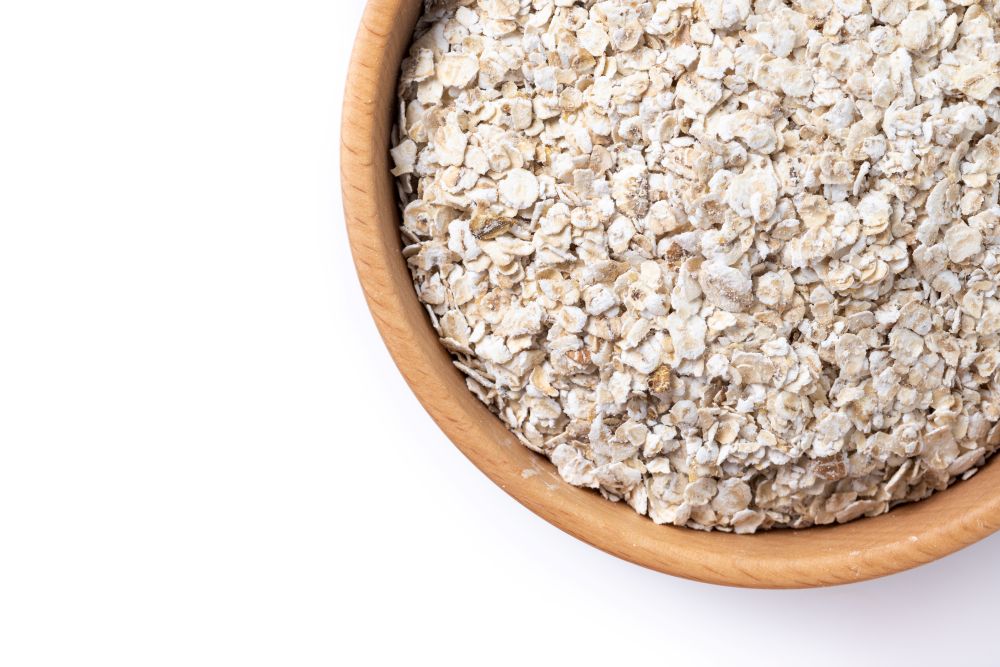
2.1 Whole oat grain
- 3–7% beta-glucan by dry weight
- Most of the grain is starch, protein, lipids, and other fibres
A typical 100 g serving of raw oats provides roughly 3–6 g beta-glucan.
2.2 Oat bran
- 7–12% beta-glucan
- Higher because the bran contains the endosperm and aleurone layers where beta-glucan is concentrated
Widely used in food production and bakery applications.
2.3 Oat beta-glucan concentrates (food-grade extracts)
- 30–50% beta-glucan
- Used in beverages, supplements, food enrichment, and bakery products
- Still contains notable amounts of other oat fibres, proteins, and carbohydrates
2.4 High-purity commercial extracts
Common industry standardised products (e.g., Coming Herb):
- 70% beta-glucan
- 80% beta-glucan
These grades are widely used in:
- nutritional supplements
- cholesterol-management products
- functional food products
- high-end beverage formulations
2.5 Ultra-pure analytical or pharmaceutical grades
- 90%+ beta-glucan
- Used for research, diagnostics, or highly specialised applications
- Mostly pure glucose-based beta-glucan with very little contamination
2.6 Cosmetic liquid beta-glucan
- Often only 1% active beta-glucan
- The remaining 98–99% is water and preservatives
- Common preservatives include sodium benzoate, potassium sorbate, phenoxyethanol, etc.
These are used in skin care for hydration, soothing, barrier repair, and anti-inflammation.
3. How to Verify the Actual Beta-Glucan Percentage in Your Material
To verify the true beta-glucan content in your material, you must use standardised, scientific, laboratory-grade testing methods.
There are two widely accepted approaches:
4. Laboratory Testing Methods for Measuring Beta-Glucan Content
4.1 AOAC Method 995.16 — The International Gold Standard
This is the most accepted method for determining beta-glucan in oat and barley products.
- Uses enzymatic digestion to remove non-beta-glucan polysaccharides
- Measures beta-glucan specifically
- Highly accurate and precise
- Used by major regulatory bodies, universities, and food testing labs
If you want the most trustworthy result, always request AOAC 995.16 testing.
4.2 Megazyme Beta-Glucan Assay Kit (Mixed-Linkage)
This method is widely used in:
- ingredient companies
- quality control laboratories
- research institutions
It is based on specific enzyme reactions that break down β-(1→3)(1→4)-glucans only, allowing precise quantification.
Megazyme is a globally recognised developer of enzymatic testing kits and is considered a reliable industry standard.Megazyme
4.3 HPLC and chromatographic methods (optional)
HPLC can be used to determine:
- molecular weight distribution
- purity
- chain length variation
But it is not typically used to quantify beta-glucan percentage itself. It is mainly for advanced characterisation.
5. How to Compare Different Suppliers Accurately
Many suppliers claim high beta-glucan purity, but real quality varies greatly. To compare suppliers objectively, follow this structured evaluation method.
5.1 Always compare using the same testing method
Different labs produce different results. For fair comparison:
- Use AOAC 995.16 whenever possible
- Or request the same lab test all samples
- Or test with the same Megazyme kit series
Without standardisation, results may differ by 5–15%.
5.2 Look at batch-to-batch stability
High-quality suppliers maintain:
- narrow moisture range
- consistent molecular weight
- steady viscosity performance
- similar beta-glucan percentage in every batch
If the COA varies wildly (e.g., one batch 70%, next batch 62%), this is a warning sign.
5.3 Check if “beta-glucan content” refers to dry basis or as-is
This is a common source of confusion.
For example:
- A 70% beta-glucan on dry basis may be only 64% as-is because of moisture.
- Unscrupulous suppliers sometimes quote dry-basis content to inflate numbers.
Always ask:
“Is the beta-glucan content measured on an as-is basis or dry basis?”
5.4 Assess whether the supplier provides third-party testing
Reliable suppliers provide:
- standard COAs
- method descriptions
- clear extraction process transparency
5.5 Compare extraction method and processing quality
High-quality extraction yields stable, high-purity beta-glucan.
Poor extraction results in:
- protein contamination
- starch residues
- lipid impurities
- unstable colour or odour
Ask suppliers for:
- extraction method description
- processing flowchart
5.6 Molecular weight verification
A supplier should be able to provide:
- MW (molecular weight) range
- viscosity data
If a supplier cannot describe the molecular weight profile, they might not understand their own product well enough.
6. How Do I Know If My Supplier’s Active Content Claim Is Reliable?
Here is a practical checklist to evaluate supplier reliability.
6.1 Red flags (avoid these suppliers)
- COA claim to contain beta-glucan, but do not provide a detection method
- Refuses to disclose testing method
- Shows only in-house testing
- Cannot provide a sample
- Offers unusually low prices
- Cannot explain molecular weight or extraction method
- COA looks copied or identical across batches
6.2 Green flags (signs of reliable suppliers)
- Provides AOAC 995.16 or Megazyme-based
- Allows customer testing
- Transparent about extraction method
- Has stable price range based on market norms
- Shows consistent quality across several batches
- Has clear, detailed specification sheets
6.3 The simplest rule
Trust only what is verified by standard laboratory testing.
Do not rely solely on marketing claims or unverified COAs.
7. Why Beta-Glucan Purity Matters: Impact on Health and Function
7.1 Cholesterol-lowering effect
Both the US FDA and European Food Safety Authority (EFSA) have concluded:
- Daily intake of 3 g oat beta-glucan
- For at least 4 weeks
- Helps maintain normal cholesterol levels
High-purity extracts (70–80%) make it easier to deliver the required dosage in supplements and functional foods.
7.2 Blood glucose support
Oat beta-glucan slows carbohydrate absorption by increasing solution viscosity in the digestive system. Purity and molecular weight directly influence glycaemic response.
7.3 Digestive health
As a soluble fibre, beta-glucan:
- supports gut microbiota
- improves stool consistency
- increases satiety
Higher purity offers stronger functional performance.
7.4 Skin and cosmetic benefits
Even at low concentrations (1–5%), beta-glucan:
- hydrates skin
- supports barrier repair
- reduces inflammation
- soothes irritation
8. Practical Steps for Buyers: How to Control Quality
Here is a simple, actionable checklist for purchasing oat beta-glucan
Step 1 — Request COA with AOAC 995.16 testing
This is the gold standard.
Step 2 — Confirm “as-is” vs “dry basis”
Always compare results based on as-is content.
Step 3 — Ask for a sample
Test viscosity, colour, solubility, and flow.
Step 4 — Conduct your own third-party laboratory testing
Especially for large orders or long-term partnerships.
To wrap up
Oat beta-glucan is a scientifically supported, highly functional soluble fibre with wide applications in nutrition, health products, and cosmetics. Its main active ingredient — the β-(1→3),(1→4)-D-glucan polysaccharide — is responsible for its health benefits, viscosity, and physiological performance.
To ensure product quality, buyers must:
- understand typical beta-glucan content levels
- use standardised testing methods
- compare suppliers with objective criteria
- verify purity with AOAC 995.16 or Megazyme tests
By following this guide, you can make confident, evidence-based decisions and ensure your products achieve the desired health and functional outcomes.
